Blood tests for pancreatic cancer
What blood tests can and cannot tell you in pancreatic cancer: routine blood counts and chemistry, the tumour marker CA19-9, how to prepare, and how to read your results.
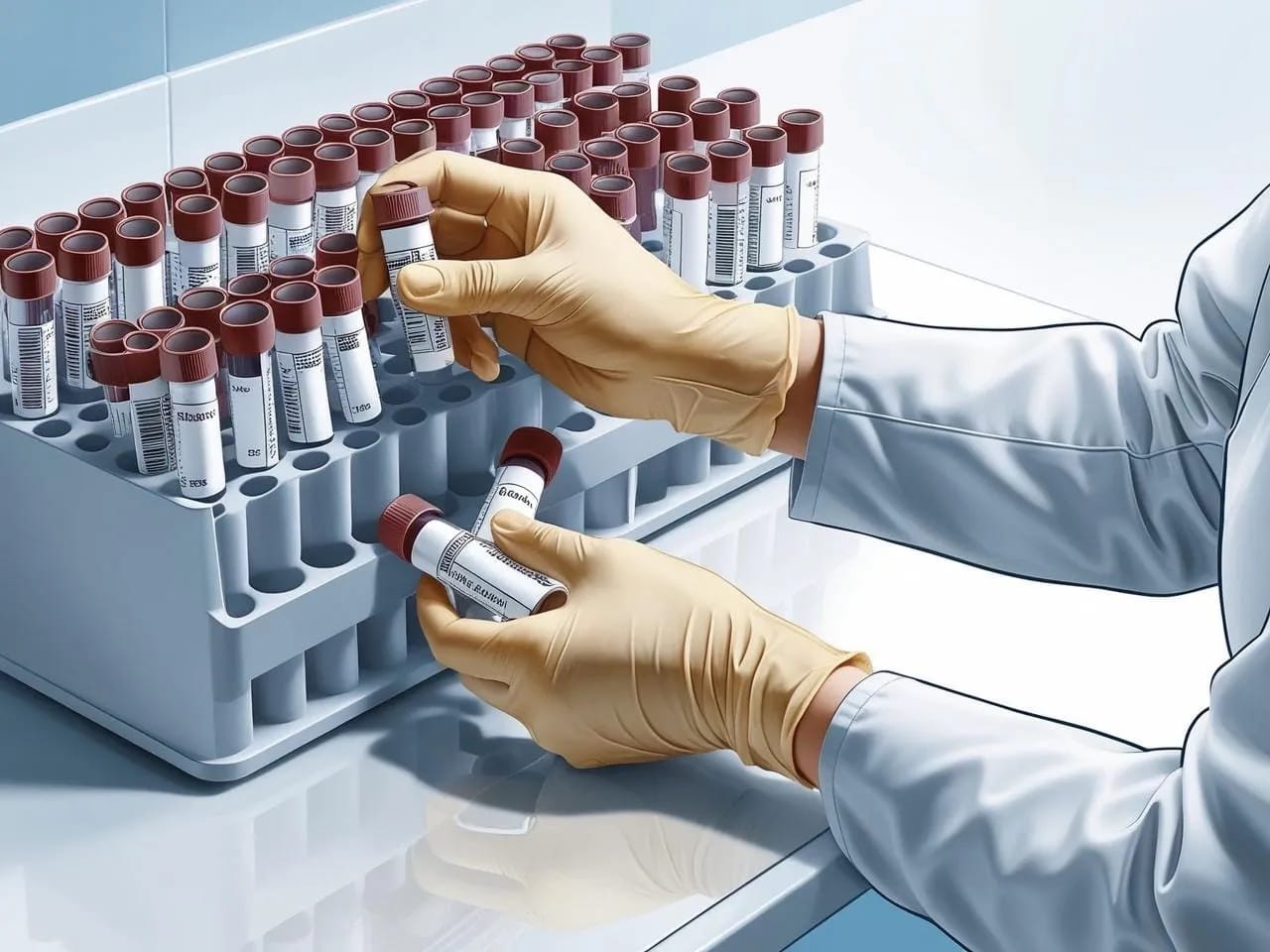
Blood tests help your care team assess your general health, investigate symptoms, and monitor the effects of treatment. Some tests may also help track pancreatic cancer over time.
Blood tests alone cannot confirm or rule out pancreatic cancer. Results need to be considered alongside symptoms, scans, and other investigations.
On this page: Common tests · CA19-9 · Preparing · Understanding results
Common blood tests at a glance
| Test or group | Why your team may order it |
|---|---|
| Complete blood count (CBC) | Checks red blood cells, white blood cells, and platelets; helps assess issues such as anaemia and treatment effects |
| Neutrophil count | Provides information about an important group of infection-fighting white blood cells |
| Liver-related tests | Help assess liver and bile-duct abnormalities |
| Kidney tests | Help assess kidney function |
| Electrolytes | Check substances involved in fluid balance and normal body function |
| Glucose | Checks blood sugar |
| CA19-9 | May help monitor pancreatic cancer in some people, alongside other assessments |
Blood tests may identify abnormalities that need further investigation, but they are not a stand-alone screening test for pancreatic cancer. Blood counts and chemistry tests also serve different purposes from tumour-marker tests such as CA19-9 — the sections below explain each group.
Complete blood count (CBC)
A complete blood count measures the cells in your blood. Three parts matter most in pancreatic cancer care:
- Haemoglobin and red blood cells carry oxygen. Low levels (anaemia) are common and can contribute to tiredness; cancer and its treatment can both lower them.
- White blood cells and neutrophils fight infection. The CBC includes the absolute neutrophil count (ANC). Neutrophils can fall during treatment — low neutrophils, not only high white-cell counts, can matter, because they affect infection risk and sometimes the timing of treatment.
- Platelets help blood to clot. Treatment can lower them, which the team watches when planning procedures and further treatment.
Your report may also list measures such as MCH, MCHC, RDW, and MPV. These describe the size and content of red blood cells in more detail; your team can explain any that matter for you.
Liver, kidney, electrolyte, and glucose tests
Blood chemistry results can change for many reasons. A result may prompt further assessment, but it does not establish the cause on its own.
Liver-related tests are usually read together. Bilirubin is a pigment that can build up if the bile duct is blocked, causing yellowing of the skin or eyes (jaundice); an abnormal bilirubin may lead the team to assess the bile duct. ALP, ALT, and AST are enzymes whose patterns help the team assess the liver and bile ducts. Albumin is a protein made by the liver; its level reflects several things, including general illness and nutrition, and it is not read as a stand-alone score.
Kidney tests (such as creatinine) show how well the kidneys are working, which matters when planning scans and treatment. Electrolytes (such as sodium and potassium) are substances involved in fluid balance and normal body function. Glucose checks blood sugar; the pancreas helps control blood sugar, and some people develop diabetes around the time of a pancreatic cancer diagnosis, so glucose is often followed over time.
CA19-9
CA19-9 is a substance that can be measured in the blood. Some pancreatic cancers produce it, so it may be checked when cancer is diagnosed and followed during treatment.
Changes in CA19-9 can contribute to the assessment of treatment response, but they are not interpreted on their own. Your team considers the trend alongside symptoms, imaging, and conditions that can affect the result.
Bile duct blockage and pancreatitis can raise CA19-9 without indicating cancer progression. Some people do not produce CA19-9, so the test may not be useful for monitoring their cancer. A high result does not establish progression, a normal result does not exclude cancer, and CA19-9 is not used to screen for pancreatic cancer.
CEA
CEA is another tumour marker that is sometimes measured. It plays a smaller role in pancreatic cancer than CA19-9 and, like CA19-9, is interpreted only as one part of the overall picture.
Understanding your laboratory report
Use the units and reference interval printed beside your own result. Reference intervals vary between laboratories and can depend on factors such as age, sex, and medical history.
A result outside the interval does not automatically mean something serious, and a result inside it does not answer every clinical question. Your team considers the result in context and may compare it with previous tests. That is why this guide does not print reference ranges: a range from another laboratory — or another country, using different units — can mislead more than it helps.
Preparing for a blood test
Follow the laboratory's instructions about eating, drinking, and medicines. Tell the person taking the sample if you have previously felt faint or had difficulty with blood collection.
Ask when results are expected, who will review them, and how you will be contacted.
Is this the same as genetic or biomarker testing?
Several different tests can use a blood sample. Routine blood counts, blood chemistry, tumour markers, and inherited genetic testing answer different questions.
- Tumour biomarker testing — testing the cancer itself for features that may guide care.
- Inherited genetic testing — testing for gene changes you were born with.
Questions
Can normal blood tests rule out pancreatic cancer?
No. Blood tests cannot confirm or rule out pancreatic cancer on their own. Scans and other investigations are needed, which is why symptoms that persist are worth raising with your care team even when blood results are normal.
Does a rising CA19-9 mean treatment has stopped working?
Not on its own. A rise can have other causes, including bile duct blockage or inflammation. Your team reads the trend together with imaging and how you are feeling before drawing conclusions.
Why might treatment be delayed after blood tests?
Treatment can affect blood counts and organs such as the kidneys and liver. If results show that counts are low or an organ needs time to recover, your team may delay or adjust treatment to keep it safer, and will explain the reason and the plan.
Who should I contact about an unexpected result?
The clinic or team that ordered the test. If you feel very unwell, use the urgent contact route your care team has given you.
How will I receive my results?
It varies by province, hospital, and laboratory. Some results appear in a patient portal; others are reviewed with you at an appointment. Ask at the time of the test how yours will reach you.
Related guides
- Imaging tests for pancreatic cancer
- Biopsy: what to expect and how to prepare
- Newly diagnosed: the Pancreatic Cancer Starter Pack
- Chemotherapy for pancreatic cancer
- What is biomarker testing?
- Inherited genetic testing for pancreatic cancer
Sources and review
This guide draws on Canadian sources, including the Canadian Cancer Society's pages on the diagnosis of pancreatic cancer, the complete blood count, and blood chemistry tests, MyPathologyReport.ca's guide to tumour markers in blood tests, and MyHealth Alberta's complete blood count information.
Last reviewed: October 24, 2026. Blood tests are ordered and interpreted by your care team; this guide explains the tests but does not interpret individual results. If you spot an error, report it and it will be corrected.