Home care equipment: a visual guide for patients and caregivers
A visual guide to common home care equipment — what each item does, when to ask about it, and the questions to ask your care team before buying or borrowing.
Home care equipment can look unfamiliar at first. This guide explains common items you may hear about, what they are used for, and questions to ask your care team.
You will not need everything shown here. The right equipment depends on your needs, your home, and the support available to you. Some items require assessment, fitting, installation, or hands-on instruction.
Planning the space and support you need? Read Preparing your home for pancreatic cancer care.
Ask your care team what is appropriate, whether equipment can be borrowed or rented, and who will explain its safe use.
The photographs show examples of each item. Models vary, and the Foundation does not recommend a particular product.
On this page: Bathing and using the toilet · Moving around · Resting and positioning · Moving between surfaces · Bed-mounted aids: special precautions · How to access equipment in Canada
Bathing and using the toilet
Shower chair
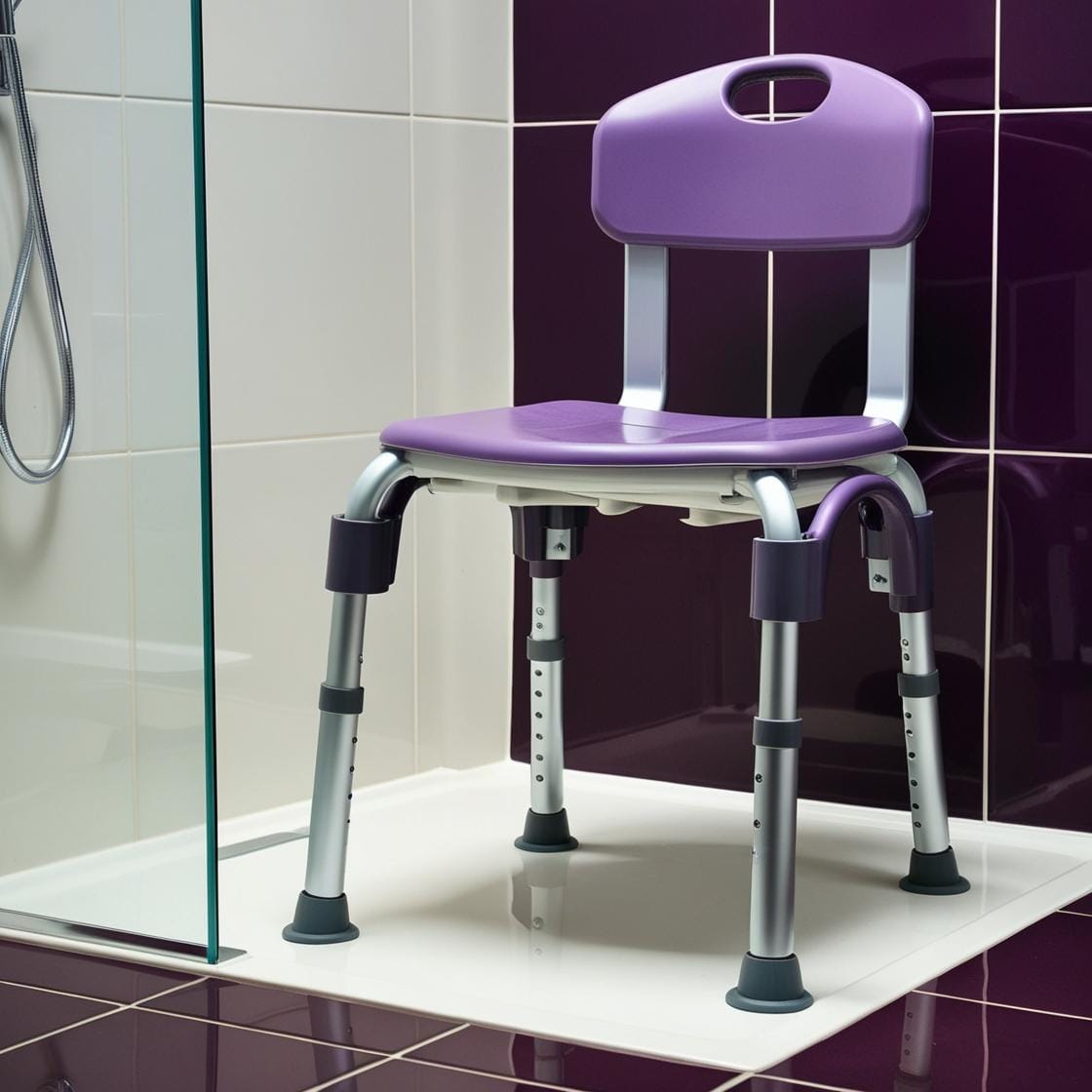
A seat used in a shower so a person can wash while sitting.
When to ask about it. If standing to shower has become difficult or tiring.
Before using it. Ask whether the chair suits the person and the shower space, and whether help getting on or off it is needed.
Ask your care team: “Would a shower chair or a different bathing aid be more suitable for me?”
Bath-transfer bench
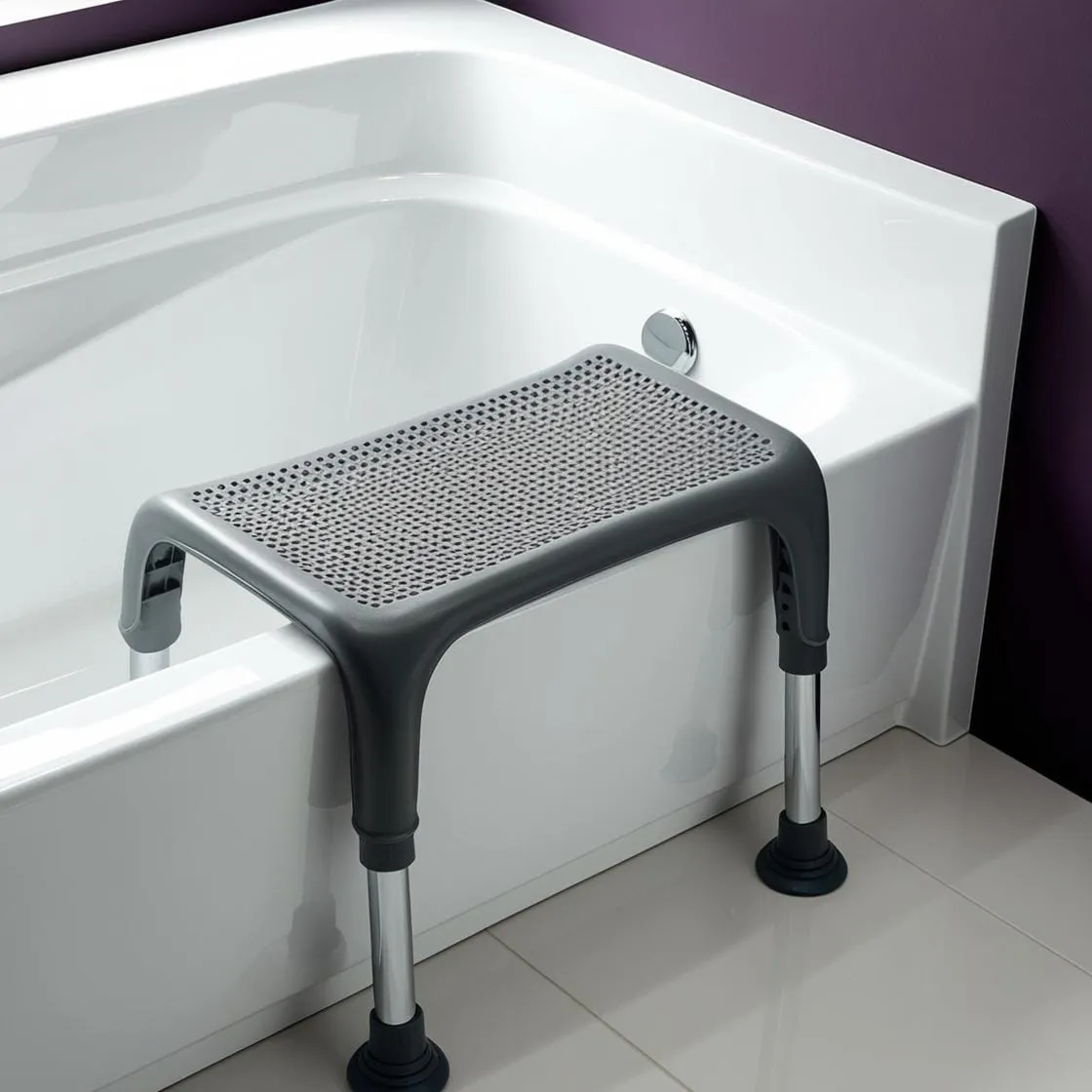
A bench that extends across the side of a bathtub and supports a seated transfer.
When to ask about it. If stepping over the side of the tub has become difficult.
Before using it. Ask whether it fits the bathroom and whether the person can use it safely. Request a demonstration of the recommended transfer method.
Ask your care team: “Can you show us how a transfer into the bath should be done with this bench?”
Raised toilet seat and toilet frame
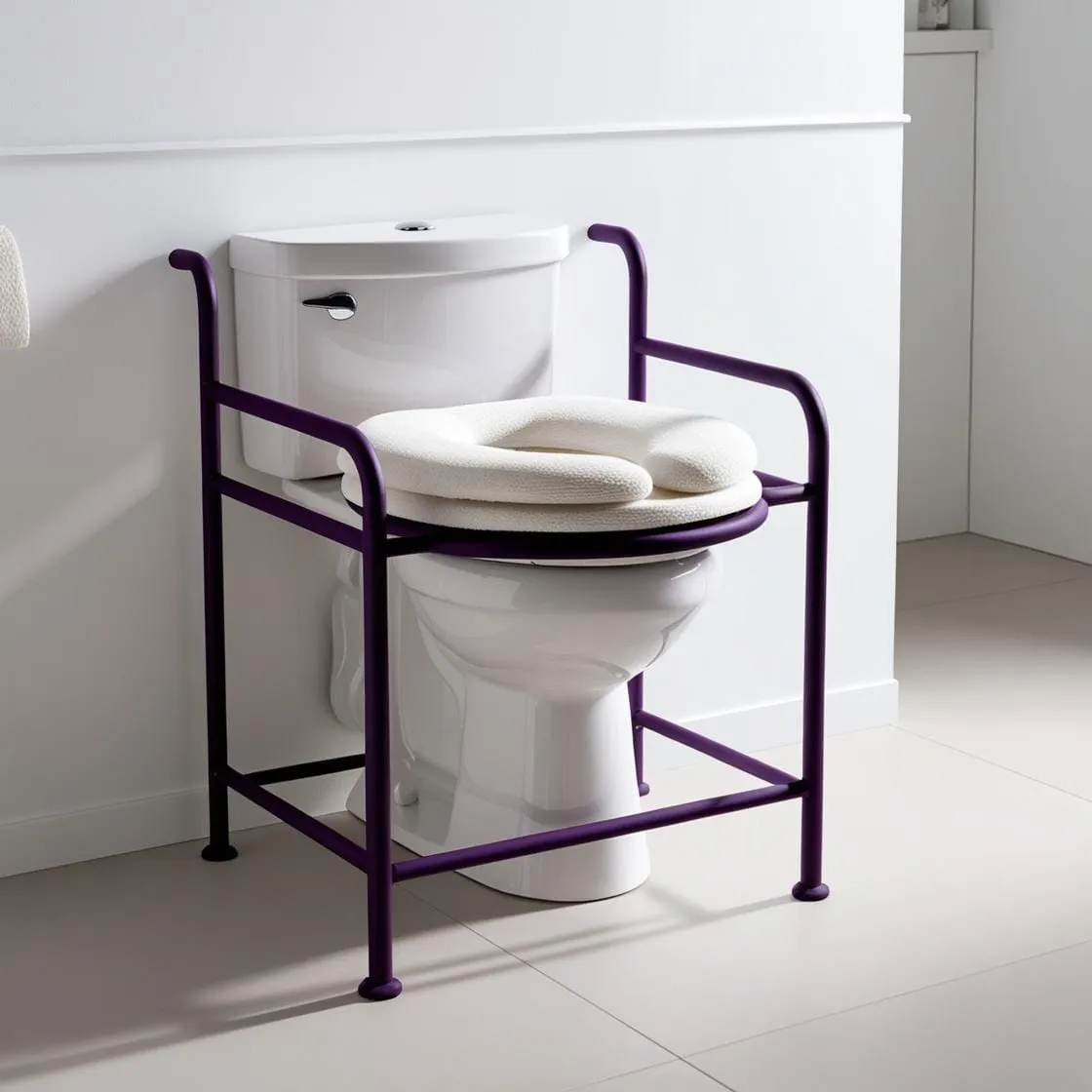
A raised seat, often with a surrounding frame and armrests, that reduces how far a person has to lower and raise themselves.
When to ask about it. If sitting down on the toilet or standing up from it has become difficult.
Before using it. Ask which height and style suit the person, and whether the frame fits the bathroom and is secured properly.
Ask your care team: “Would a raised seat, a frame, or both be better in our bathroom?”
Commode
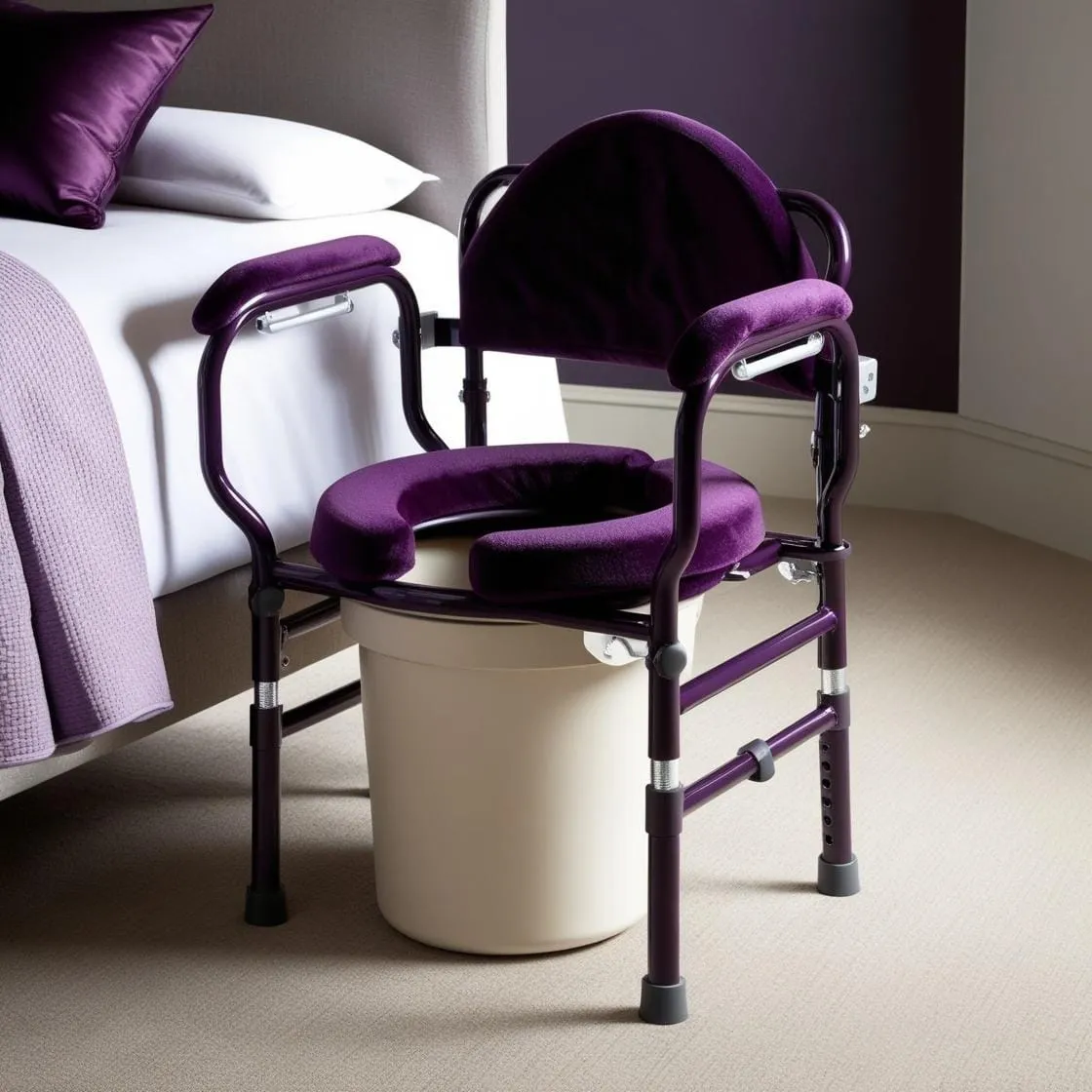
A chair with a toilet seat and a removable container, used in a bedroom or living area when getting to the bathroom is difficult.
When to ask about it. If the bathroom is far away, upstairs, or hard to reach in time — especially at night.
Before using it. Ask about placement, and who will empty and clean it. Ask whether a commode is the right answer, or whether a change in the bathroom would serve better.
Ask your care team: “Who empties and cleans the commode, and how often?”
Grab bars

Bars fixed to walls — commonly beside a toilet, in a shower, or next to a bath — that give a person something solid to hold while moving.
When to ask about it. If the person is unsteady getting up, sitting down, or moving around the bathroom.
Before using it. Grab bars need to be anchored into the wall structure and positioned for the person. A suction-cup bar is not the same thing. Ask who should install them, and where.
Ask your care team: “Where should grab bars go in our bathroom, and who installs them properly?”
Moving around
Walking aids — walker and rollator
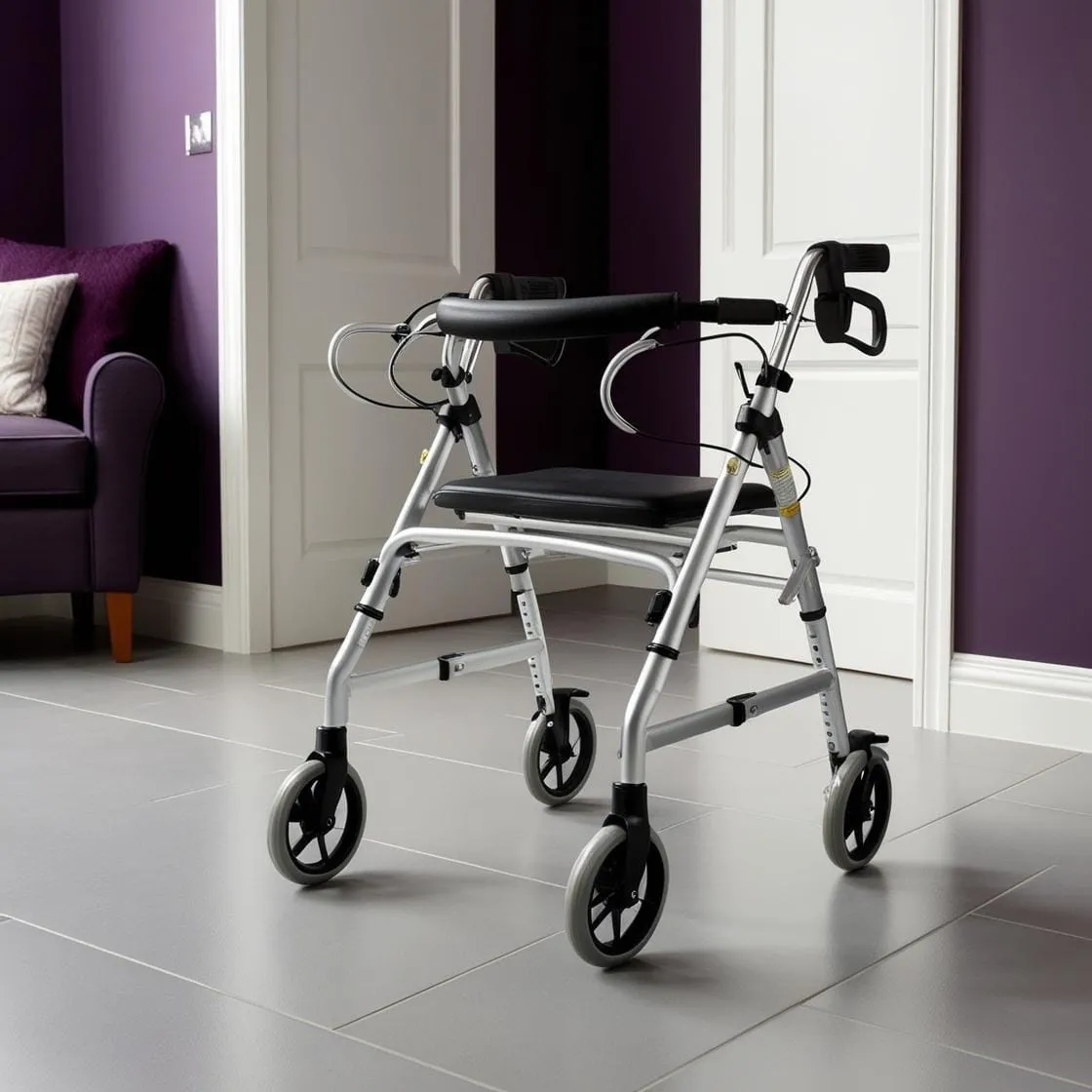
A frame, with or without wheels, that a person leans on for support while walking. The photograph shows a rollator — a wheeled walker with brakes and a seat.
When to ask about it. If walking has become unsteady, or weakness and fatigue are limiting how far the person can go.
Before using it. Height and brake setup matter, and the right aid depends on the person’s strength and balance. Ask for an assessment and a fitting.
Ask your care team: “Which walking aid fits my strength and balance, and can it be adjusted for me?”
Wheelchair
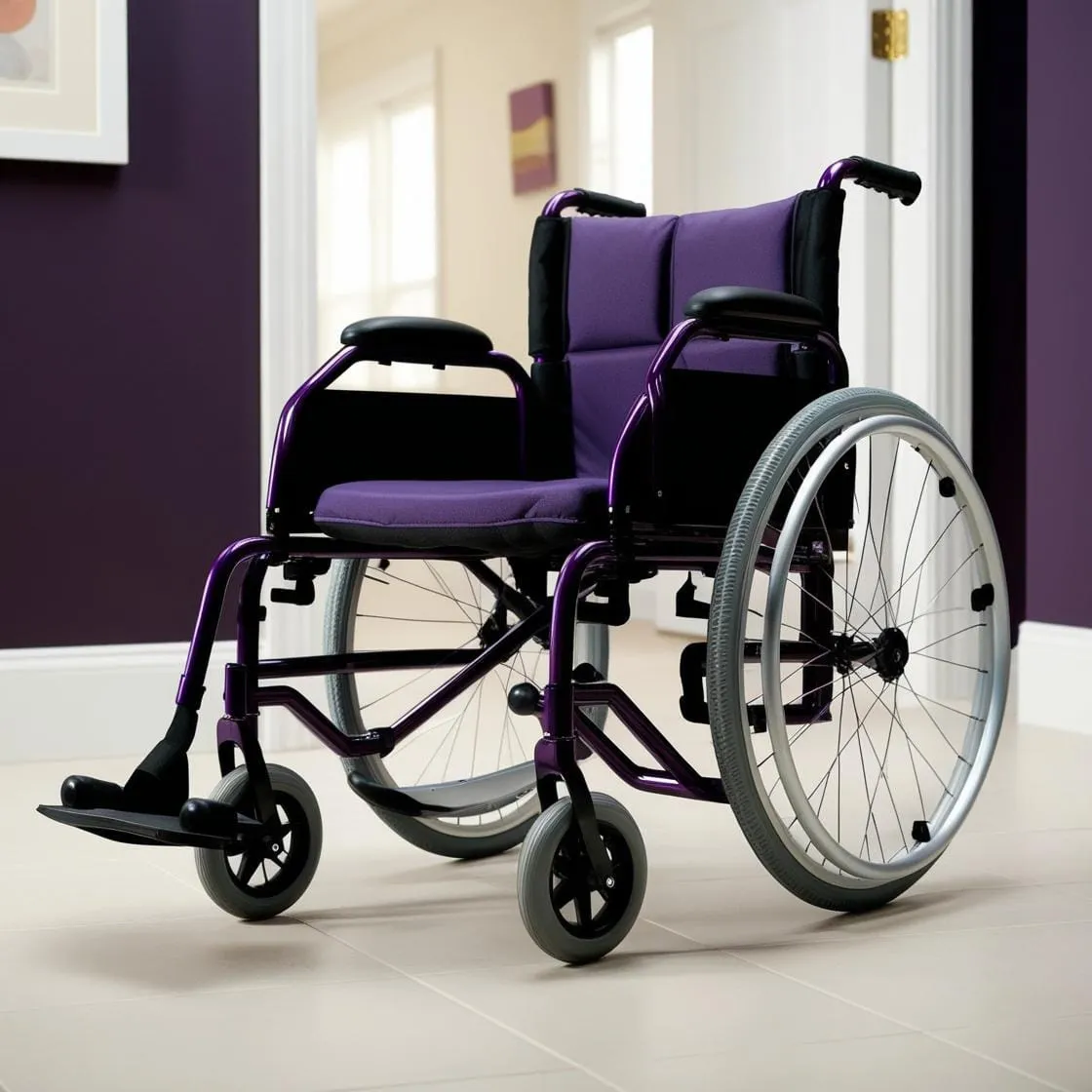
A chair on wheels for moving around at home and getting to appointments when walking is limited or exhausting.
When to ask about it. If fatigue or reduced mobility makes walking any distance difficult.
Before using it. Ask about sizing and cushions, and check how the chair will move through the home’s doorways and turns. Moving in and out of the chair needs instruction.
Ask your care team: “What size and cushion do I need, and will it fit through our doors?”
Resting and positioning
Bed wedge
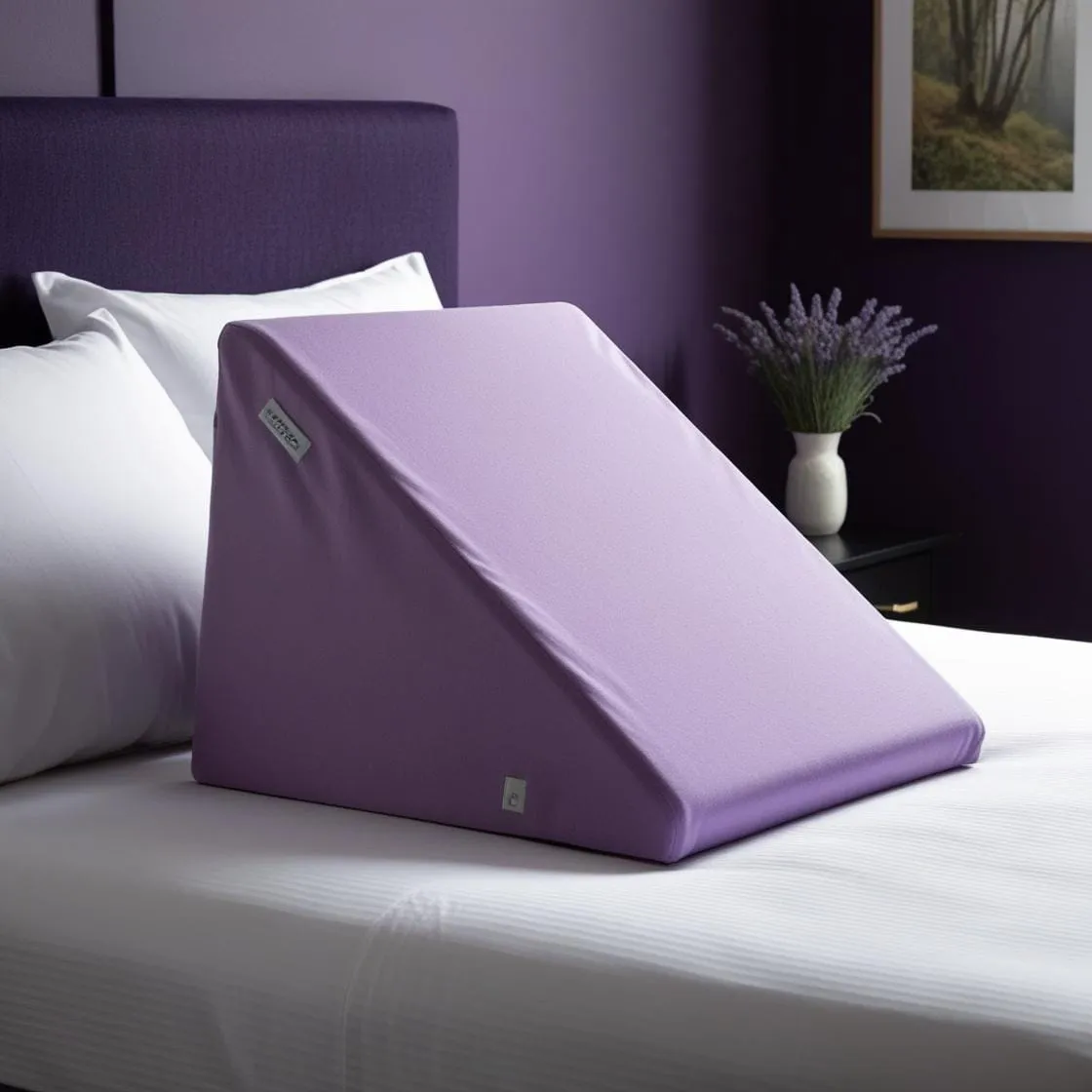
A wedge-shaped cushion used to support an elevated resting position. Ask your care team whether this positioning is appropriate for your needs.
When to ask about it. If lying flat has become uncomfortable.
Ask your care team: “Is an elevated resting position right for me, and at what angle?”
Adjustable care bed
A bed whose back and knee sections raise and lower — some are also height-adjustable — used when resting and moving in bed need support.
Adjustable beds are usually arranged through a care provider, a loan program, or a supplier after an assessment, rather than bought by families on their own.
Ask your care team: “Would an adjustable bed help in our situation, and who arranges one?”
Pressure-relieving cushions and mattresses
Cushions and mattress overlays designed to spread pressure for someone spending long periods in a chair or in bed.
Choosing one is an assessed clinical decision based on skin risk — ask the care team rather than choosing from a catalogue.
Ask your care team: “Is my skin at risk from sitting or lying for long periods, and what cushion or mattress do I need?”
Moving between surfaces
Transfer aids
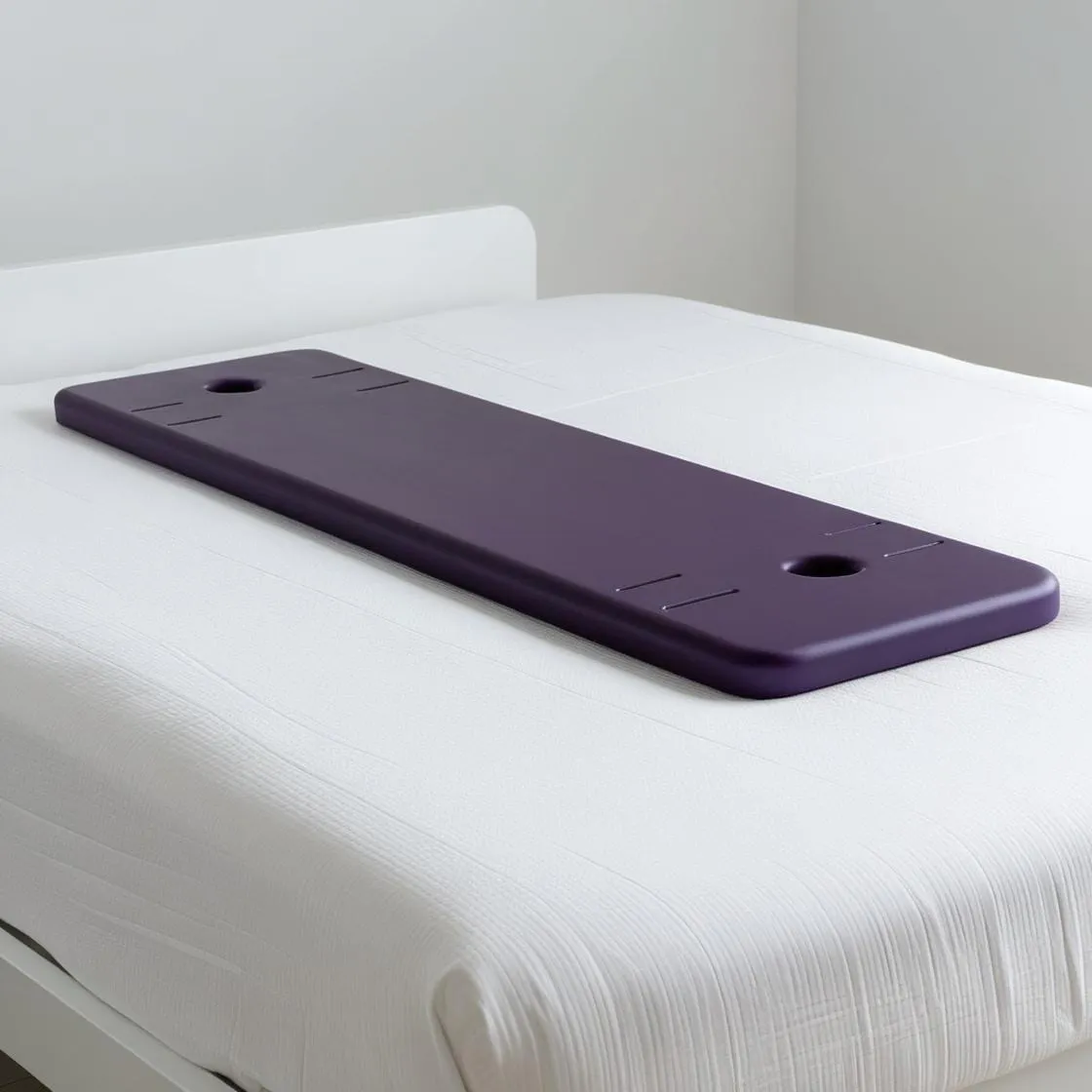
Different transfer aids support different movements between beds, chairs, and other surfaces. Ask the care team which device, if any, is appropriate and request hands-on instruction before using it.
This guide identifies equipment; it does not teach lifting or transfer techniques.
When to ask about it. If moving between a bed, a chair, the toilet, or a car has become difficult.
Ask your care team: “Which transfer aid fits the moves we make every day, and can you watch us practise?”
Bed-mounted aids: special precautions
Bed rails and bed-assist handles
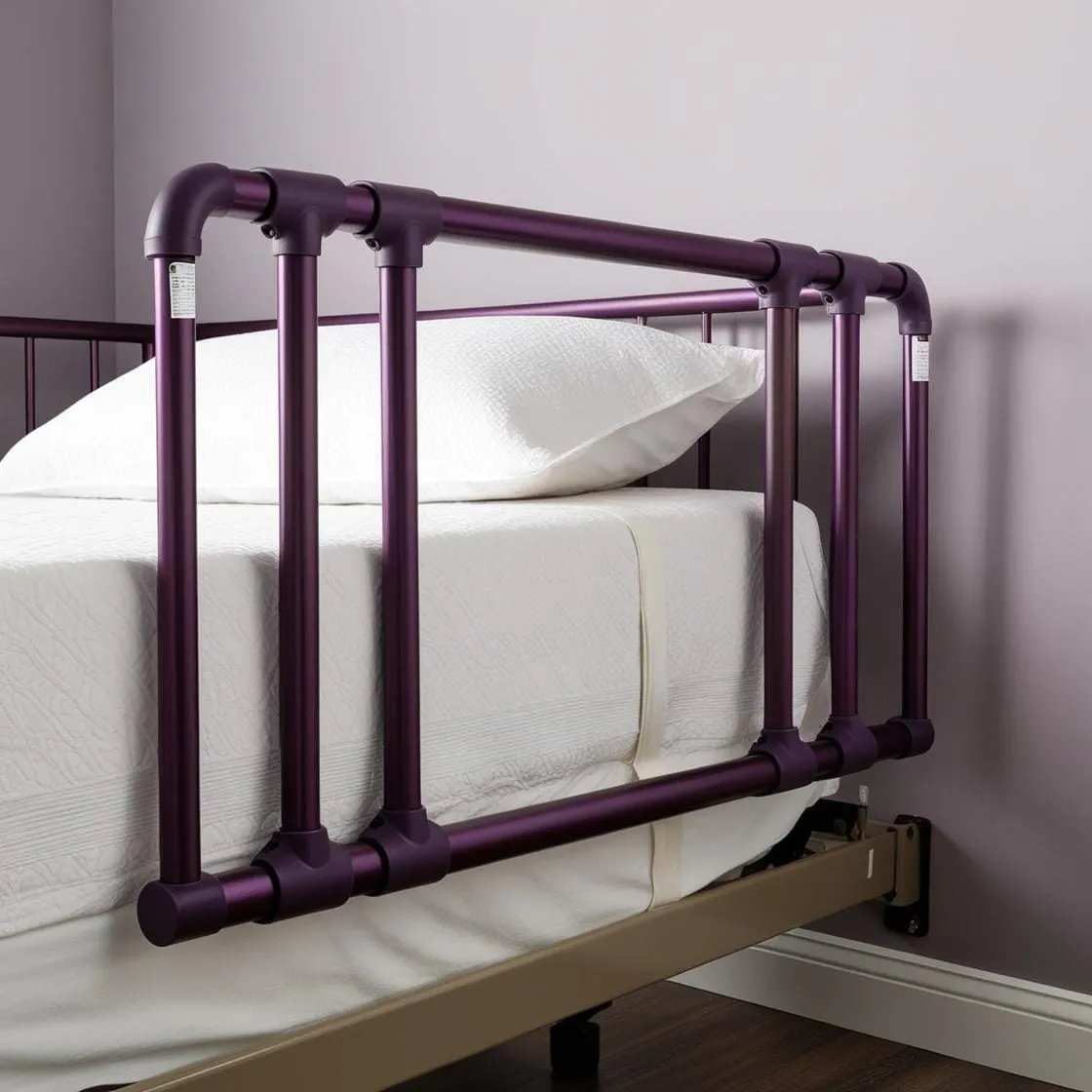
Some bed-mounted aids may help with repositioning or getting into and out of bed. They are not suitable for everyone. Bed rails can create serious entrapment risks, particularly when the rail, mattress, and bed are incompatible.
Before using one, ask a qualified healthcare professional to assess its suitability and confirm correct fitting. Do not assume a rail makes a bed safer.
Health Canada’s guidance on hospital bed safety explains the entrapment risks and how to check that a rail, mattress, and bed fit together.
How to access equipment in Canada
Ask your hospital discharge team, home-care provider, occupational therapist, physiotherapist, or nurse where to start. Equipment may be available through a loan program, rental service, public program, or private supplier. Local eligibility, referral requirements, and availability vary.
Canadian Red Cross Health Equipment Loan Program. The Red Cross runs equipment-loan programs in several provinces and territories, including in Atlantic Canada, generally with a referral from a healthcare professional. Its Atlantic program also lends hospital beds to eligible people. Availability and items vary by community. Health Equipment Loan Program — Canadian Red Cross
For local programs and who to contact, see your province or territory’s guide.
Questions to ask before equipment arrives
- ☐ Do I need a referral?
- ☐ Can I borrow or rent this rather than buy it?
- ☐ Is there a fee or funding option?
- ☐ Who delivers, fits, or installs it?
- ☐ Who shows us how to use it?
- ☐ Who do we call if it stops working?
- ☐ How is it returned when no longer needed?
Related guides
- Preparing your home for pancreatic cancer care
- Caregivers Hub
- Financial Support
- Provincial & Territorial Guides
Sources: Health Canada, Hospital bed safety; Canadian Red Cross, Health Equipment Loan Program; Macmillan Cancer Support, Equipment and home adaptations.
Written by Christopher Cutler, The Heather Cutler Foundation. Last updated October 26, 2026. Spotted an error? Report it here. Our editorial standards explain how pages are sourced and reviewed.